Sleep & Bedroom Ergonomics
Pillow Loft by Sleep Position: A Guide to Neck Alignment
A pillow can look perfectly comfortable on the bed and still feel wrong beneath your head. The key is not height alone, but how that height changes under pressure—and whether the resulting support suits your sleep position, mattress and body.
Published October 22, 2026
There is a quiet geometry to a good night’s sleep. The head settles, the shoulders meet the mattress, and the neck occupies the space between. A pillow fills some of that space. Too little or too much loft can leave the head tipped or tilted for hours; a suitable pillow helps it rest in a position that feels natural and supported.
That simple idea can get lost in a crowded market of fill types, firmness claims and ideal-sounding dimensions. “Loft” is often treated as a fixed measurement, but a pillow’s listed height is only part of its story. What matters is the height it maintains once a sleeper is lying on it. A lofty pillow that compresses substantially may end up low. A denser one with a smaller profile may hold its shape and feel higher.
Sleep position offers a useful first clue. Side sleepers often need more lift than back sleepers because the shoulder creates a wider gap between the head and mattress. Stomach sleepers commonly find a low-profile pillow more comfortable, since extra height can turn the head farther to the side or extend the neck. But these are starting points, not rules. Shoulder width, mattress firmness, body proportions, pillow fill and personal comfort all change the equation.
What pillow loft means in practice
Pillow loft describes how high a pillow holds the head when someone lies down. It is sometimes described as low, medium or high, though those labels are not standardized across every maker. Measurements taken while a pillow is unoccupied can also be misleading: a pillow’s compressed height depends on the fill, construction and the pressure applied by the sleeper.
Think of loft as a relationship, not a number. The pillow is working alongside the mattress. A firm mattress may allow the shoulders to remain higher relative to the surface, leaving more room for the pillow to fill. On a softer mattress, the shoulder may sink farther, reducing the space the pillow needs to bridge. Two people using the same pillow can therefore experience different support, even if the pillow itself has not changed.
The goal is not to force the head into a rigidly prescribed pose. It is to avoid an obvious, sustained bend or twist and to find a position that feels relaxed. A pillow may feel plush at first but allow the head to sink too far. Another may seem firm in the hand but hold the neck in a comfortable position once the body settles. A few minutes of testing in a showroom or on a neatly made bed cannot always predict a full night; repeated use and attention to how it feels on waking provide more useful clues.
Side sleeping: filling the shoulder-to-head space
For many side sleepers, the pillow must bridge the space between the mattress and the side of the head without pushing the head sharply upward. A higher loft is often a sensible place to begin, especially for someone with broad shoulders or a firmer mattress. A narrower shoulder or a mattress that lets the shoulder sink more may call for less height.
When the pillow is too low, the head can angle down toward the mattress. When it is too high, the head can tilt away from it. Either mismatch may feel uncomfortable, although people experience and describe that discomfort differently. Rather than chase a precise measurement, check whether the head seems to continue the line of the upper back when viewed from behind or reflected in a mirror. The comparison is only a rough self-check, not a medical assessment.
Side sleepers can also pay attention to how the shoulder meets the bed. The pillow should support the head, not force the shoulder upward or crowd it. Some sleepers prefer a shaped pillow or one with a firmer edge; others do well with a more adjustable fill. A pillow that can be reshaped may make it easier to accommodate differences in shoulder width or the way a person curls during sleep.
Back sleeping: support without pushing the chin forward
Back sleepers often start with a medium or lower loft than side sleepers. The pillow should support the natural curve behind the neck while allowing the head to rest without being propped sharply forward. If a pillow is too high, the chin may feel pushed toward the chest. If it is too flat, the neck may feel as though it is not being supported.
There is no single ideal contour for every back sleeper. Some prefer a level, relatively even surface; others find a gently shaped pillow more comfortable. The important question is how the head and neck feel once settled. A pillow should not require constant adjustment to prevent a sensation of strain, and it should not make breathing or swallowing feel uncomfortable. Persistent discomfort, numbness or pain deserves more than another pillow experiment; a qualified health professional can help assess possible causes.
Back sleepers who move between positions should consider that a pillow chosen only for the first few minutes on their back may feel different after rolling onto a side. A flexible fill or a shape that accommodates some movement can be helpful. The best choice is not necessarily the one that makes one position feel perfect while making every other position difficult.
Stomach sleeping: why a low profile often matters
Stomach sleeping generally leaves less room for a tall pillow. Since the face is turned to one side, a high pillow can add to the angle at the neck. Many stomach sleepers begin with a very low-profile option—or no pillow beneath the head—because that feels less elevated. Comfort remains individual, and no sleep position can be reduced to a universal prescription.
People who sleep partly on their stomach and partly on their side face a different compromise. A pillow that is comfortable when lying face down may feel too low after rolling over. Some may prefer a compressible pillow that can be repositioned; others may find that changing to a more side-oriented posture is more comfortable. A body pillow or a separate arrangement for different positions can be considered if it suits the sleeper, but complexity is not a requirement for good rest.
How fill changes the feel of a pillow
Fill affects how a pillow compresses, rebounds and responds to movement. It can change the effective loft as much as the pillow’s initial height. The material label alone does not tell the whole story: fill amount, chamber design, casing and construction all influence how the pillow behaves.
- Down: Down pillows are known for a soft, pliable feel. They can compress and be shifted or fluffed, which may appeal to sleepers who like to shape a pillow through the night. Their support depends on the construction and amount of fill, and a soft pillow may not maintain the same height under every head.
- Down alternative: Synthetic alternatives vary widely. Some are soft and easy to reshape; others are designed to feel fuller or hold a more consistent form. Labels do not guarantee a particular loft, so construction and how the pillow feels under pressure matter.
- Latex: Latex pillows tend to feel more responsive than loose fills, though firmness and shape vary. A responsive pillow may spring back after pressure rather than staying compressed, which some sleepers like and others find unfamiliar.
- Memory foam: Foam pillows can contour to the head and neck, with different models offering different degrees of firmness and rebound. Their feel may depend on room temperature and construction, and a shaped design will not suit every sleeper.
- Wool or other natural fills: Natural materials differ in density, compressibility and care requirements. They may be blended or arranged in ways that change how readily the pillow can be adjusted.
These are broad tendencies, not guarantees. Even pillows made from the same material can behave differently. A down pillow, for example, may be very soft and easy to compress, or it may use chambers that help distribute fill and preserve shape. A useful test is to press down with a hand, release, and observe how quickly the pillow rebounds. Then consider whether that response seems suited to the position in which you spend most of the night.
Firmness, loft and support are related—but not identical
It is tempting to use “firm” as a synonym for “supportive.” The terms describe different qualities. Firmness is the surface’s resistance to pressure; support is the way the pillow holds a sleeper’s head and neck in a comfortable position. A soft pillow can provide adequate support for one person, while a firm pillow can feel poorly matched to another. Height alone does not determine either result.
Likewise, a high pillow is not automatically more supportive. If it compresses too easily, its effective loft may be low. If it holds its shape too aggressively, it may raise the head more than the sleeper prefers. The better question is whether the pillow keeps a suitable height through the night without creating a pressure point or requiring constant reshaping.
A practical way to assess your current pillow
Before replacing a pillow, observe what happens with the one already on the bed. Start in the position you use most often, then note what changes when you settle in. Does the pillow flatten quickly? Does the head seem tipped upward or downward? Are you folding, bunching or stacking it to make it comfortable? Do you wake up feeling that you need to reposition it repeatedly?
- Identify your usual position. Consider how you actually sleep, rather than only the position you adopt at bedtime. Many people change positions during the night.
- Notice the mattress. A firmer or softer surface can affect how far the shoulder sinks and how much pillow height feels comfortable.
- Check compression. Compare the pillow’s height before lying down with the height it maintains under your head. A pillow that looks tall may compress substantially.
- Pay attention to waking comfort. Keep brief notes for several mornings. One restless night can have many causes, so look for a repeated pattern rather than drawing a conclusion from a single experience.
- Change one factor at a time. If possible, adjust loft or firmness without also changing the mattress, sleep schedule and other parts of the bed at once.
If you are considering a new pillow, look for clear information about its fill, construction, care instructions and any available return or trial terms. A pillow that can be adjusted may be useful when the right loft is uncertain. But adjustability is only valuable if the pillow can be reshaped reliably and remains comfortable in use.
Common mistakes in choosing pillow loft
One frequent mistake is choosing by sleeping position alone. Position gives a starting point, but it cannot account for shoulder width, mattress feel, body shape, movement or individual preference. Another is assuming that a higher price or more elaborate construction guarantees a better fit. A pillow is personal equipment; it succeeds when it suits the sleeper, not when it makes the boldest promise.
It is also easy to mistake a familiar feel for a good fit—or an unfamiliar feel for a bad one. Someone accustomed to a very tall pillow may initially find a lower one strange, even if it feels more comfortable after adjustment. Conversely, the first impression of softness may not hold up over several hours if the pillow loses height. Give a change a reasonable, consistent trial, while paying attention to discomfort rather than trying to endure it.
Finally, avoid treating pillow choice as a diagnosis. Neck discomfort can have many causes, and a pillow is only one part of a sleep setup. Ongoing or worsening pain, tingling, weakness, injury-related symptoms or other concerning signs are reasons to seek advice from a health professional rather than relying on loft adjustments alone.
A pillow is part of a system
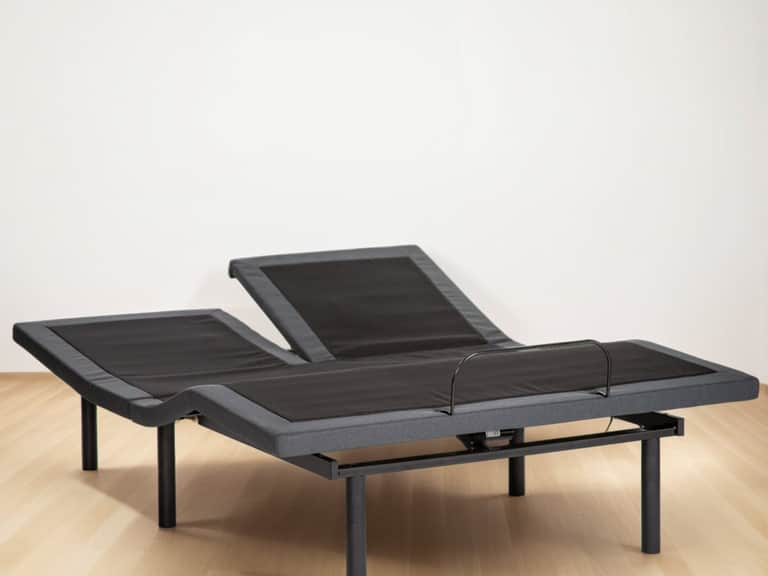
Neck alignment does not begin and end with the pillow. Mattress firmness, shoulder position, headboard or bed angle, sleep habits and the amount of movement during the night can all affect what feels comfortable. If an adjustable base changes the angle of the upper body, for instance, the usual relationship between head, neck and mattress changes too. A pillow that feels right on a flat surface may feel different when the bed is inclined.
That is why the most useful approach is patient and practical. Start with sleep position, consider how the fill behaves, and evaluate the pillow in the context of the bed beneath it. Make adjustments gradually. The aim is not a perfect diagram or a universally correct loft; it is a comfortable, repeatable setup that lets the head and neck rest without obvious strain.
The bottom line
Side sleepers often benefit from more loft, back sleepers commonly prefer a moderate height, and stomach sleepers frequently feel better with a low profile. Those patterns can help narrow the field, but they are not fixed instructions. Effective pillow loft is the height a pillow maintains under the sleeper—not simply the height it has on the shelf.
Choose by observing how the pillow compresses, how it supports your usual position and how comfortable you feel over time. Fill matters because it changes the pillow’s response; firmness matters because it changes how that response feels. Yet neither material nor label can substitute for a good personal fit. The best pillow is the one that supports comfortable rest for the person using it.